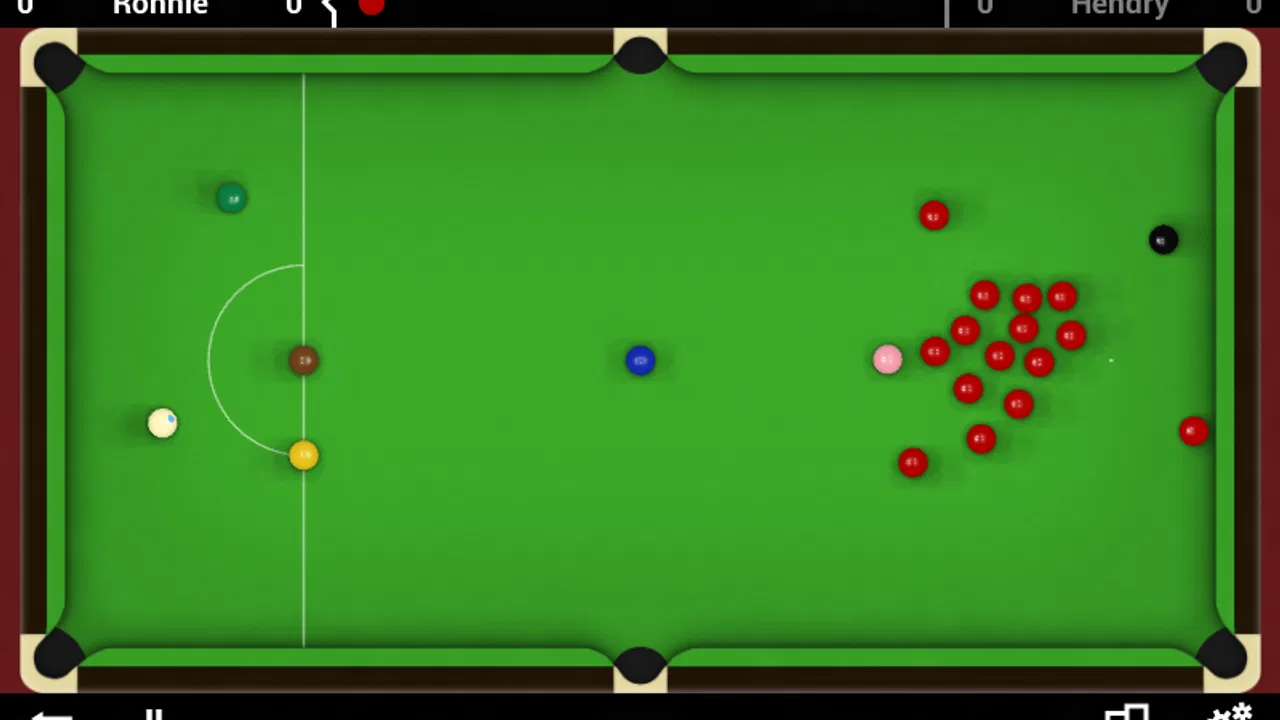
Total Snooker Classic Pro
- 1.0
- Rating
- 10.00K
- Installs
- $1.99
- Price

 Analysis by App-foxy
I approached Total Snooker Classic Pro as a compact sports game rather than a full replacement for a table, a cue, or a serious snooker simulator. Its appeal is straightforward: it puts a playable version of snooker on an Android device and lets me take on the computer or another person. That simple promise is also the key to judging it fairly. This is an older, paid game from Friendly Monster, and its best qualities appear when I want a quick, focused match instead of a large collection of modern extras.
The game belongs to the sports category and is suitable for Everyone, so it is easy to understand why it can appeal to casual players, younger users, and anyone who enjoys turn-based competition without complicated controls. It costs $1.99, which changes the question slightly. I am not judging it as a free experiment that costs nothing to try; I am asking whether its focused snooker experience is worth paying for when mobile stores contain many other sports games and pool alternatives.
My short answer is that it can work for a very specific player: someone who wants a traditional, uncomplicated snooker game and does not need a modern presentation or a deep online ecosystem. If you expect polished visuals, extensive tutorials, active competitive services, or a long list of modes, I would be cautious. The average rating is 1.0 from around 564 ratings, while the game has passed 10K+ installs, so the public reaction is clearly a serious warning sign. I would not ignore that before spending money, even though a rating alone cannot explain every individual experience.
You May Also Like

 Blood Strike: 2.5 Anniversary
Blood Strike’s Loadouts Turn Every Drop Into a Tactical Gamble
A close look at Blood Strike’s custom loadouts: how fast access to signature weapons reshapes its battle royale rhythm, rewards preparation, and narrows the gap between fights.

 Pandora - Music & Podcasts
Pandora’s Music Is Easy to Start, but Harder to Recover
Pandora’s strength is its low-effort path from a seed to a station. Its weak spot is how much confidence it asks you to place in connection, setup, and quiet recovery.

 8 Ball Pool
 Is Built on Rivalries, Rematches, and Routine
A close look at the rivalries, rematches, shared routines, and unanswered safety questions that turn a quick pool match into a persistent mobile community.

 Samsung Music
’s Quiet Strength Is Playing What You Already Own
Its reach comes less from spectacle than from dependable access to a personal library. That simplicity is both the app’s strongest retention engine and its ceiling.

 AccuWeather: Weather Radar
AccuWeather Review: A Quick, Clear Forecast for Everyday Decisions
For everyday plans, the best forecast is the one you can understand quickly. AccuWeather makes rain timing, radar, and local conditions easy to act on, with a few trade-offs.

 Hill Climb Racing
Why Hill Climb Racing Still Turns Crashes Into One More Run
A tiny car, a bumpy hill and one more upgrade: Hill Climb Racing keeps resurfacing because its simple chaos makes every near-miss feel personal.
More From Our News Desk



How a normal match feels on a phone
I find a phone match works best when I treat the screen as a planning surface, not a miniature real-world table: settle the aim, make a controlled shot, then judge the next position. That keeps ordinary turns calm and makes it easier to tell whether a miss came from my decision or my touch. It also sets up the next section’s focus on what I check before committing to a shot.
The basic workflow is deliberately simple
My usual session starts with a practical decision: do I want to practise the feel of positioning and shot selection, or do I want a complete match against an opponent? The store summary presents two central choices, friends and AI, and that gives the game a narrow but understandable rhythm. I choose a side, study the table, line up the cue, and try to build a sequence of sensible shots rather than treating every turn as an isolated hit.
That last point matters more in snooker than it does in many casual pool games. A good shot is not only about potting the ball in front of me. I also need to think about where the cue ball will finish and whether the next shot remains comfortable. On a small touchscreen, that creates a useful mental exercise: I have to slow down, check the angle, and avoid the temptation to make a risky attempt simply because it looks available.
For a quick everyday scenario, I can imagine opening it during a short break, playing a few turns against the AI, and closing the game without needing a long setup. It fits that kind of use better than a feature-heavy sports title. I do not need to manage a career, unlock a large roster, or learn a complicated control scheme before reaching the table. The trade-off is that the same simplicity may feel sparse if I want a reason to return every day beyond improving my own decisions.
Playing against a friend changes the mood. A local pass-and-play style session can make a basic game much more enjoyable because the tension comes from the person beside me, not from presentation or progression systems. I would treat this as a social tabletop-style game: one person takes a turn, the other watches the layout, and the match becomes a test of patience and accuracy. It is a better fit for two people sharing a device than for somebody looking for a broad multiplayer community.
What I pay attention to before taking a shot
I get more from the game when I use a repeatable routine. First, I identify the easiest realistic pot rather than the most ambitious one. Then I consider the cue-ball route and the likely position for the following shot. Finally, I check whether the intended line leaves a safety problem if the pot fails. This habit is more valuable than rushing through a frame, especially because touchscreen play can encourage quick swipes and imprecise decisions.
A useful trick is to separate aiming from striking. I take a moment to settle the direction, then make the shot with the same calm movement each time. If I continually adjust while also trying to control power, I lose track of which part of the shot caused the mistake. The game becomes easier to assess when I change one thing at a time: angle first, strength second, and outcome last.
I also avoid judging the game after one awkward turn. Mobile snooker can feel unforgiving when the table is viewed on a small screen, and an early miss may come from my own rushed input rather than from the game itself. After several turns, I can tell whether I am making poor tactical choices or struggling with the controls. That distinction is important before deciding that the whole experience is unsuitable.
Settings and device habits worth checking
I would begin by checking the available in-game options before starting a serious match. I would not assume that every version offers the same level of adjustment, but basic habits still help: use a screen brightness level that makes the balls and table easy to read, turn off distractions around the phone, and play in a position where my hand is not covering the aiming area. These are small changes, yet they matter more in a precision game than they would in an arcade sports title.
The current version is 1.10.0, and the listed minimum operating-system requirement is Android 7.0. That makes compatibility worth checking before purchase, particularly if I am using an older phone or tablet. A larger screen may make aiming more comfortable, but it can also make the game feel less convenient for a quick session. I would choose the device that gives me the clearest view without making the controls awkward to reach.
When I play against the AI, I use the first few turns as a calibration period. I watch how much movement on the screen produces the amount of aim or power I expect. Rather than immediately attempting difficult positional play, I start with straightforward shots and learn the response of the interface. This is an important practical step because a player coming from a physical table may instinctively expect the same feedback, while a touchscreen gives a much more limited sense of contact and speed.
For friend matches, I prefer agreeing on a simple rhythm before starting. Passing the device immediately after every turn can become distracting, especially if both players are still learning the controls. Taking a moment to leave the table in a clear state makes the match easier to follow. This is not a feature of the game itself; it is a way to get more value from a basic local session and avoid turning the interface into the main source of friction.
Faster patterns that improve ordinary play
The fastest way to improve is not to attempt advanced shots constantly. I find it more effective to create a small set of repeatable decisions. If a safe pot is available, I take it. If the cue ball would finish badly, I choose a less ambitious line. If the table is open, I think one shot ahead instead of trying to plan an entire sequence that depends on perfect execution. This approach reduces wasted turns and makes the game feel more deliberate.
I also use a simple risk filter. Before striking, I ask whether the shot gives me two benefits: points now and a reasonable next position. If it offers only the first, I consider whether a safety-minded choice is better. That is where the game can teach useful snooker thinking even without an elaborate coaching system. The player learns to value table control, not just successful contact.
Another helpful pattern is to practise power separately from accuracy. I begin with moderate shots and only increase force when the layout requires it. Strong strikes may look satisfying, but they can leave the cue ball in an unpredictable place and make the next decision harder. In a short mobile match, controlled speed often produces a better result than trying to reproduce dramatic professional play.
For the AI, I treat each turn as information. I watch whether it tends to take difficult opportunities, how it responds to open layouts, and whether its choices encourage me to play aggressively or conservatively. I would not expect an older, compact game to provide the same adaptive challenge as a modern specialist simulator. Still, observing the opponent helps me decide whether I am enjoying the tactical problem or merely repeating the same type of match.
Where the game becomes less convincing
The biggest limitation is not that the concept is small; it is that a small concept needs dependable execution to stay interesting. A player who wants a deep career, detailed player development, rich presentation, or a large competitive community may quickly reach the edge of what this game offers. The store description focuses on playing snooker against friends or the AI, and I would keep my expectations close to that scope.
The low public rating makes this limitation more important. I would not buy it expecting the broad polish associated with current premium sports releases. The game was released on April 26, 2012, so its age is part of the experience even when the basic idea remains understandable. Older presentation can be perfectly acceptable for a focused table game, but it may feel dated to anyone accustomed to modern animation, menus, tutorials, and online services.
There is also a difference between playing snooker on a phone and learning snooker in a meaningful physical sense. The game can help me think about shot order, risk, and cue-ball placement, but it cannot reproduce the feel of a real cue, the resistance of cloth, or the visual judgement required around a full-size table. I would use it as a mental practice tool and a casual game, not as a substitute for real-world training.
I would also skip it if my main goal is fast arcade action. Snooker is naturally slower and more thoughtful than many mobile sports games, and this title’s straightforward format does not appear designed to compensate with a large amount of spectacle. A pool game with exaggerated effects or a newer sports title with progression may be a better choice for someone who wants constant rewards and rapid matches.
Who should spend the money?
The $1.99 price is easiest to justify for a player who already likes snooker and wants a modest offline-style pastime on Android. It may suit someone who prefers paying once for a compact game rather than dealing with a free title built around repeated prompts or a large progression loop. It is also a reasonable possibility for two people who want to share a device and create their own competition.
I would be more hesitant for a newcomer who has never played snooker. The game’s basic premise is easy to grasp, but understanding why one shot is better than another takes patience. If I were recommending it to a friend, I would explain that the fun comes from learning the table and making conservative choices, not from expecting the game to teach every rule through a polished tutorial.
The Everyone age rating makes it broadly accessible, but accessibility in the age-rating sense is not the same as ease of mastery. Younger players may enjoy taking shots immediately, while experienced players are more likely to appreciate the tactical side. A parent looking for a colourful, highly guided sports game should probably compare other options first; a family member who already enjoys cue sports may find the simpler format more appealing.
How it compares with common alternatives
Compared with a modern pool or snooker game, this one is likely to feel narrower. Newer alternatives often compete through presentation, online features, progression, customisation, or a larger selection of tables and challenges. Those additions can make a game more engaging over weeks, but they can also make it feel busy. Total Snooker Classic Pro is more attractive when I want the table itself to remain the focus.
Compared with a physical board or tabletop activity, it has the convenience of being available on a phone and does not require equipment or a dedicated room. The cost is a loss of tactile feedback and social presence. A real table is better for learning touch and building an authentic routine, while this game is better for a quick mental match when the real alternative is unavailable.
Compared with free mobile games, the paid model may be appealing if I dislike aggressive monetisation, but the purchase only makes sense if the core match experience is enough for me. I should not assume that paying automatically means the game has the depth of a premium modern release. Here, the value is concentration and simplicity, not a large amount of content.
My approach to getting better over time
If I decided to keep playing, I would use short sessions with one clear goal each time. One session could focus on aiming, another on controlling power, and another on leaving the cue ball in a useful position. This is more productive than playing several frames without noticing why shots succeed or fail. The game’s compact design makes that kind of self-directed practice possible, because there are fewer systems competing for my attention.
I would also keep a mental note of recurring errors. If I repeatedly miss on one side of the pocket, my alignment may be wrong. If I pot successfully but lose the next turn, my position planning is probably weak. If I make good plans but fail to execute them, I should reduce shot difficulty until my control becomes consistent. These observations turn a basic mobile game into a small practice routine rather than a sequence of random attempts.
There is a useful trade-off between playing the AI and playing a friend. The computer gives me a predictable way to practise without worrying about another person’s pace, while a friend creates pressure and makes safety decisions more meaningful. I would alternate between them: use the AI to test a technique, then play a person to see whether I can use it when the table and score feel more demanding.
My verdict after looking beyond the first frame
Total Snooker Classic Pro is a focused, old-fashioned sports game with a clear purpose. I like the idea of opening it, taking a few careful shots, and concentrating on the table without navigating a large collection of systems. The ability to challenge the AI or play with friends gives it a useful foundation, and its Everyone rating makes it approachable for a wide audience.
At the same time, I cannot recommend it as a universal snooker choice. The 1.0 average from around 564 ratings is too concerning to dismiss, and the game’s 2012 release places it far from the expectations set by newer mobile sports titles. The $1.99 price is modest, but I would still compare screenshots, device compatibility, and my own priorities before buying. Someone seeking depth, modern polish, or a strong online scene should look elsewhere.
For me, the deciding question is whether a small, direct snooker table is enough. If the answer is yes, I can see the value in its low-complexity workflow: choose a shot, think about position, control the strike, and learn from the next turn. If I need progression, spectacle, or extensive instruction, the game will feel limited very quickly. I would recommend it only to a patient cue-sports fan who understands that its strength is focus, not abundance.
Friendly Monster has kept the concept easy to describe, but that simplicity places all the pressure on the moment-to-moment experience. My best sessions come when I slow down, use repeatable aiming habits, and treat every shot as part of a larger pattern. That makes the game more satisfying than a rushed arcade match, although it does not remove the concerns raised by its age and public reception.
In the end, I see it as a niche purchase rather than a safe recommendation for everyone. It can be worthwhile for short, thoughtful Android sessions and friendly pass-and-play competition, especially for somebody who already enjoys snooker. I would skip it if I wanted a polished modern sports package. The right buyer is not looking for a huge game; they are looking for a simple digital table and are comfortable supplying much of the challenge themselves.
FAQs for Total Snooker Classic Pro
01What is Total Snooker Classic Pro?
Total Snooker Classic Pro is a digital snooker game designed for players who enjoy realistic table sports on mobile devices. It focuses on traditional snooker rules, cue control, aiming, ball positioning, and tactical play rather than fast arcade action. The game is suitable for casual matches, practice sessions, and users who want to improve their understanding of snooker strategy.
02Is Total Snooker Classic Pro easy for beginners to play?
The game is approachable for beginners, but it may take some time to master. Basic shots can be learned quickly through the aiming and power controls, while advanced play requires careful positioning, spin management, and planning several shots ahead. New players should begin with practice or easier difficulty settings before attempting more demanding opponents or competitive matches.
03Does Total Snooker Classic Pro offer realistic gameplay and controls?
Total Snooker Classic Pro aims to reproduce the fundamentals of real snooker, including aiming, shot strength, cue-ball placement, and the importance of building a break. Its controls are generally designed for touchscreens, allowing players to adjust the direction and power of each shot. The experience is most enjoyable when played patiently, since inaccurate positioning can make the next shot considerably harder.
04Can I play Total Snooker Classic Pro offline?
Availability of offline play may depend on the version and platform, so users should check the current store description before downloading. Games in this category commonly provide solo matches or practice modes without requiring a constant internet connection, while online features, advertisements, updates, or leaderboard functions may need access to the internet. Reviewing the permissions and requirements listed on the download page is recommended.
05Is Total Snooker Classic Pro free to download?
The download model can vary between Android and iOS versions, regions, and updates. Before installing, check whether the listing identifies the game as free, paid, or supported by optional in-app purchases. Also review the advertising information and purchase details, particularly if the app offers extra content, removes ads, or includes additional game modes. This helps avoid unexpected costs after installation.
Pros
- Realistic cue control makes positioning and shot planning feel rewarding.
- Multiple table layouts add variety beyond standard frame play.
- Offline matches work well when you have no internet connection.
- Clear rules make it accessible to players new to snooker.
- Progressive difficulty provides a useful challenge for experienced players.
Cons
- Some shots require precise timing that can feel unforgiving on smaller screens.
- The visual presentation feels dated compared with newer pool games.
- Opponent behavior can become predictable after extended play.
- Long matches may feel repetitive without more game modes or events.
- Some features may be limited unless the Pro version is purchased.

Total Snooker Classic Pro
Gallery